In this article
When you buy spare parts for water coolers, display counters and deep freezers, the material matters as much as the shape. A bush, a pipe, a tap and a levelling foot all work in different conditions, and each is made from the material that suits that job. This guide explains, in general terms, where nylon, HDPE, PPCP, brass and stainless steel are used and why. It is meant to help you choose and to read a catalogue with more confidence. It is not a technical datasheet, and it does not replace the specification of the machine you are repairing.
Why material choice matters for spare parts
Spare parts live in demanding places. Some touch water all day, some slide against a channel thousands of times, some carry the weight of the machine, and some sit in cold, damp air. A part in the wrong material can wear early, crack, swell or corrode, and the cooler comes back for repair. Matching the material to the job is one of the simplest ways to reduce repeat repairs.
Nylon: moving and wearing parts
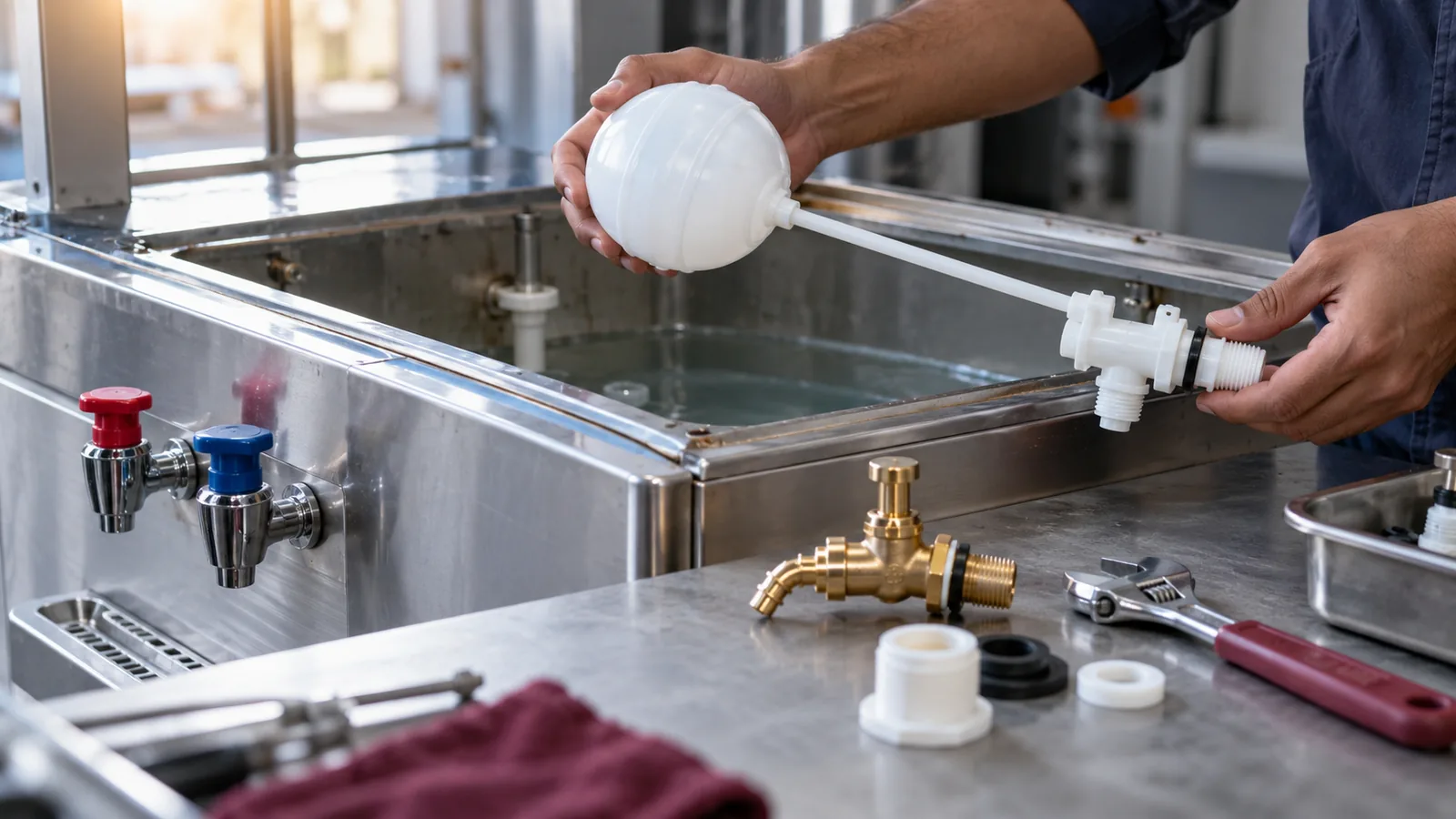
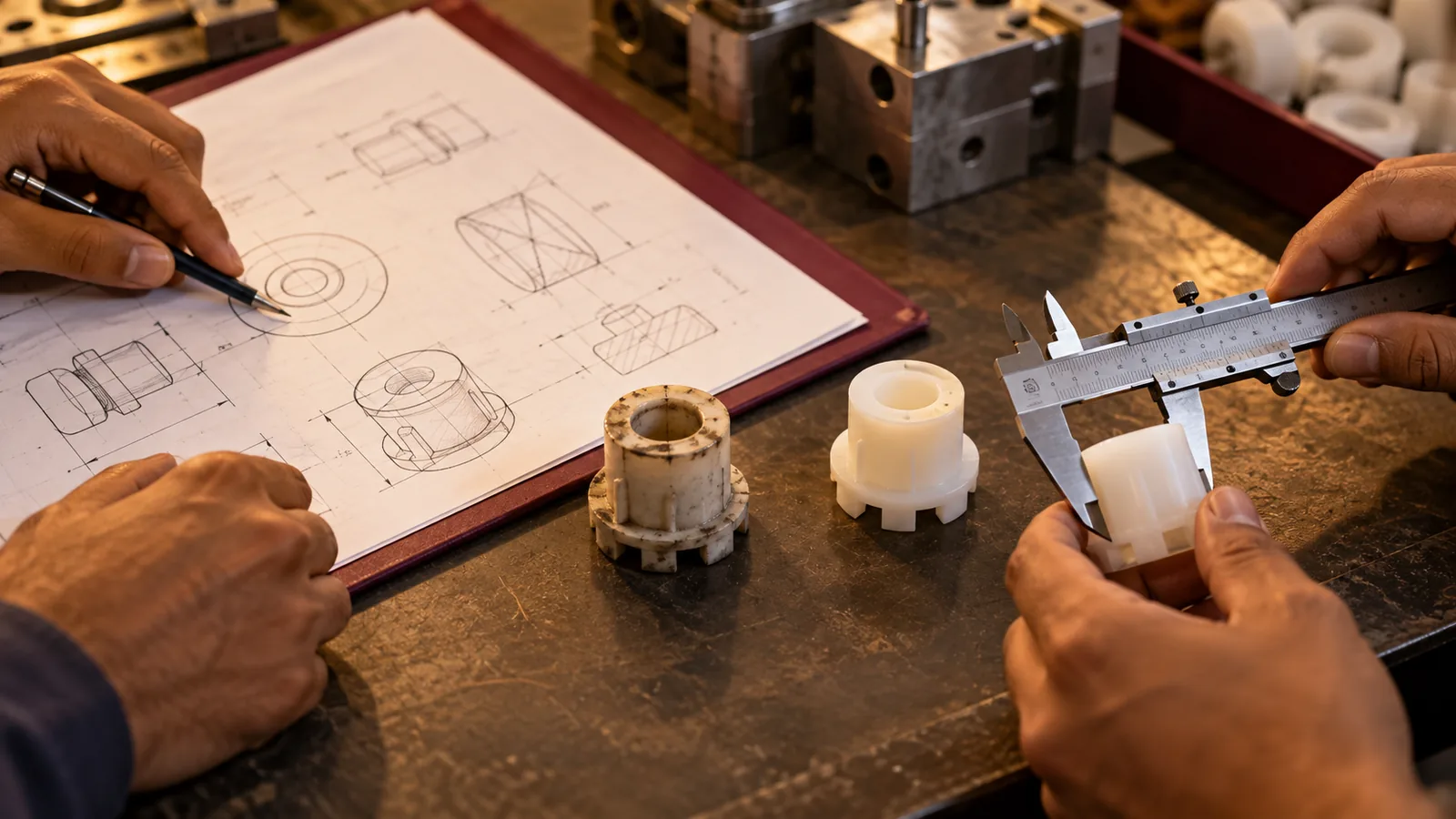
Nylon is a widely used engineering plastic for parts that rub, slide or carry a moving load, because it is tough and has a naturally smooth surface. In our catalogue, the F-bush, the float valve and the nylon variant of the connecting bush are made in nylon. One general point worth knowing: nylon can take up some moisture over time, so for any wet application it is worth confirming the design with the part you are replacing.
HDPE: tough, simple, durable shapes
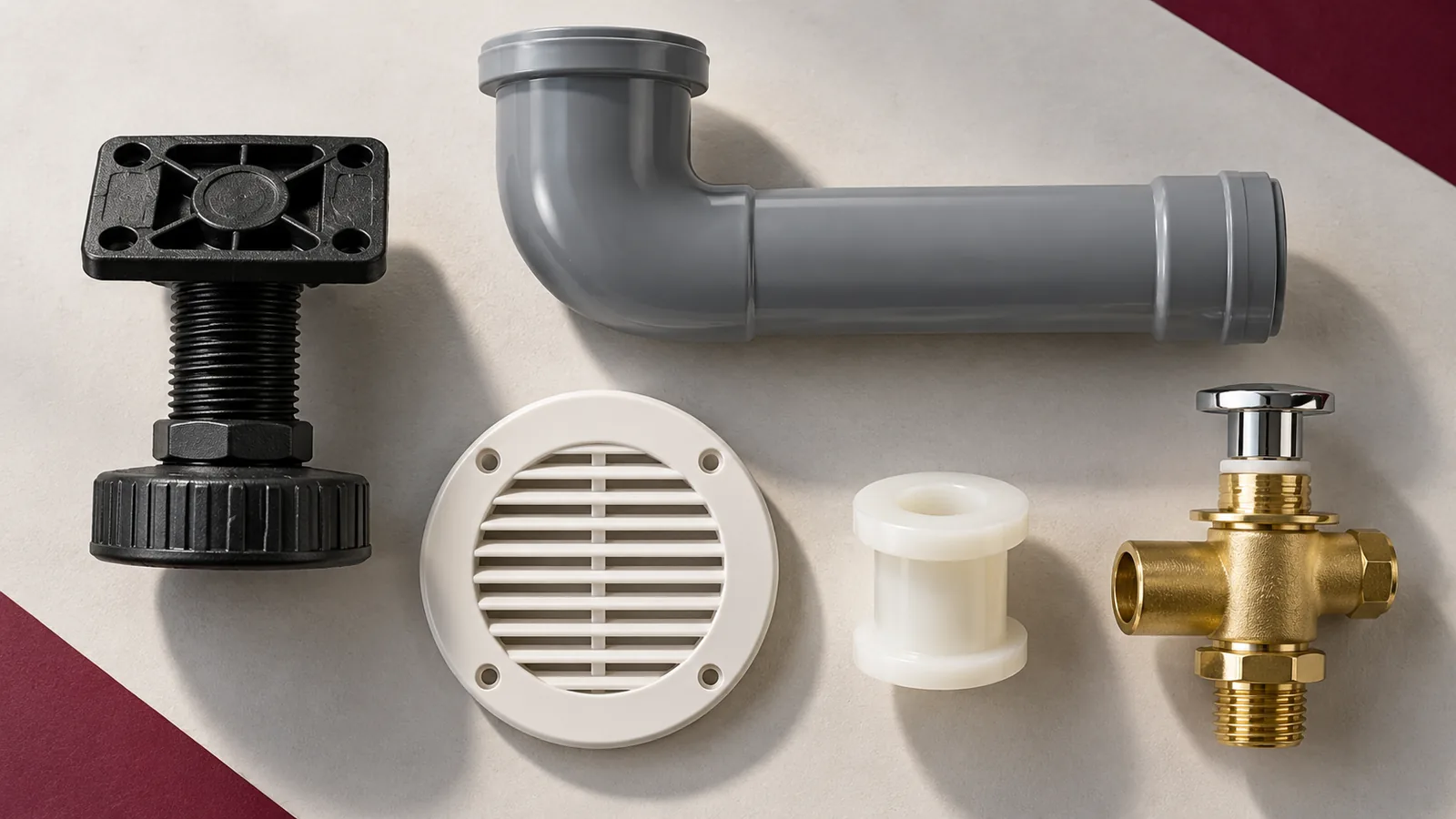
HDPE, or high-density polyethylene, is a tough, lightweight plastic known for good resistance to many common chemicals and to moisture. It is often chosen for simple, robust parts that take knocks and sit on or near the floor. Our adjustable leg insert is made in HDPE and is listed in round and square sections in five sizes, from 1 inch to 2 inches.
PPCP: pipes, grilles and stiff moulded parts
PPCP is polypropylene copolymer, a plastic that is widely used for moulded parts that need to hold their shape while still tolerating a knock. In our catalogue, the waste pipe and the ventilation jalli are made in PPCP. Both are shaped parts that are not under moving load, which is where this kind of plastic works well.
Brass: taps and threaded fittings
Brass is a metal alloy that has long been used for taps, valves and threaded fittings because it machines well, holds a thread and resists corrosion in contact with water. Our push cock is brass, and the connecting bush is listed in brass with a nylon alternative. Where a part is threaded, takes repeated tightening or is a tap that is used hundreds of times, brass is the common choice.
Stainless steel: hinges that carry load
Stainless steel is chosen where strength and corrosion resistance matter, such as door hinges that carry weight and face moisture. Our catalogue includes the SS Kabja for this kind of use.
| Material | Where it appears in our catalogue | Typical role |
|---|---|---|
| Nylon | F-Bush, Float Valve, Connecting Bush (nylon variant) | Sliding and moving parts, water-contact fittings |
| HDPE | Adjustable Leg Insert | Tough, floor-level, load-bearing shapes |
| PPCP | Waste Pipe, Ventilation Jalli | Pipes and grilles that must keep their shape |
| Brass | Push Cock, Connecting Bush | Taps and threaded fittings |
| Stainless steel | SS Kabja | Hinges and load-carrying hardware |
How to choose when you are unsure
- Start from the job: does the part slide, hold water, carry weight, seal or move air?
- Match the original: if the existing part is brass or nylon, replace it like for like unless you have a reason to change.
- Think about the environment: is the part wet, cold, or exposed to cleaning chemicals?
- Check what is offered: some parts, such as the connecting bush, come in more than one material. Ask which variant suits your assembly.
- Ask before substituting: if you want a different material from the original, confirm the choice with us first.
Buying in more than one material
Assemblers and dealers who stock parts for several machines usually need a mix of materials in one order. You can list everything in a single enquiry, and we confirm availability and quote part by part. Start with the water cooler spare parts and the deep freezer and display counter parts, then send your list through the enquiry form.
Share this guide
WhatsApp