In this article
A water cooler that overflows, drips or leaves a pool under the cabinet is one of the most common repair calls for technicians and dealers. The good news is that the fault almost always sits in one of three small parts: the float valve at the inlet, the push cock at the tap, or the waste pipe at the drain. Knowing which one is responsible saves time on site and avoids replacing parts that were never the problem.
Where water cooler leakage really comes from
Start from the symptom, not from the part. Water shows up in different places depending on what has failed.
- Water spills from the top or overflow outlet: the tank is filling past its normal level. Suspect the float valve.
- Water drips from the tap after it is released: suspect the push cock.
- Water collects below the cabinet or around the drain: suspect the waste pipe, the waste coupling or a joint between them.
| What you see | Likely part | First thing to check |
|---|---|---|
| Tank keeps filling, water overflows | Float valve | Lift the float by hand: does the inlet stop? |
| Tap drips after use | Push cock | Does it close fully when released? |
| Pool under the cooler, tap and tank dry | Waste pipe or coupling | Look for cracks, loose joints or a blocked run |
| Water level never reaches normal | Float valve or supply | Is the valve opening fully? Is the supply on? |
Overflow: check the float valve first
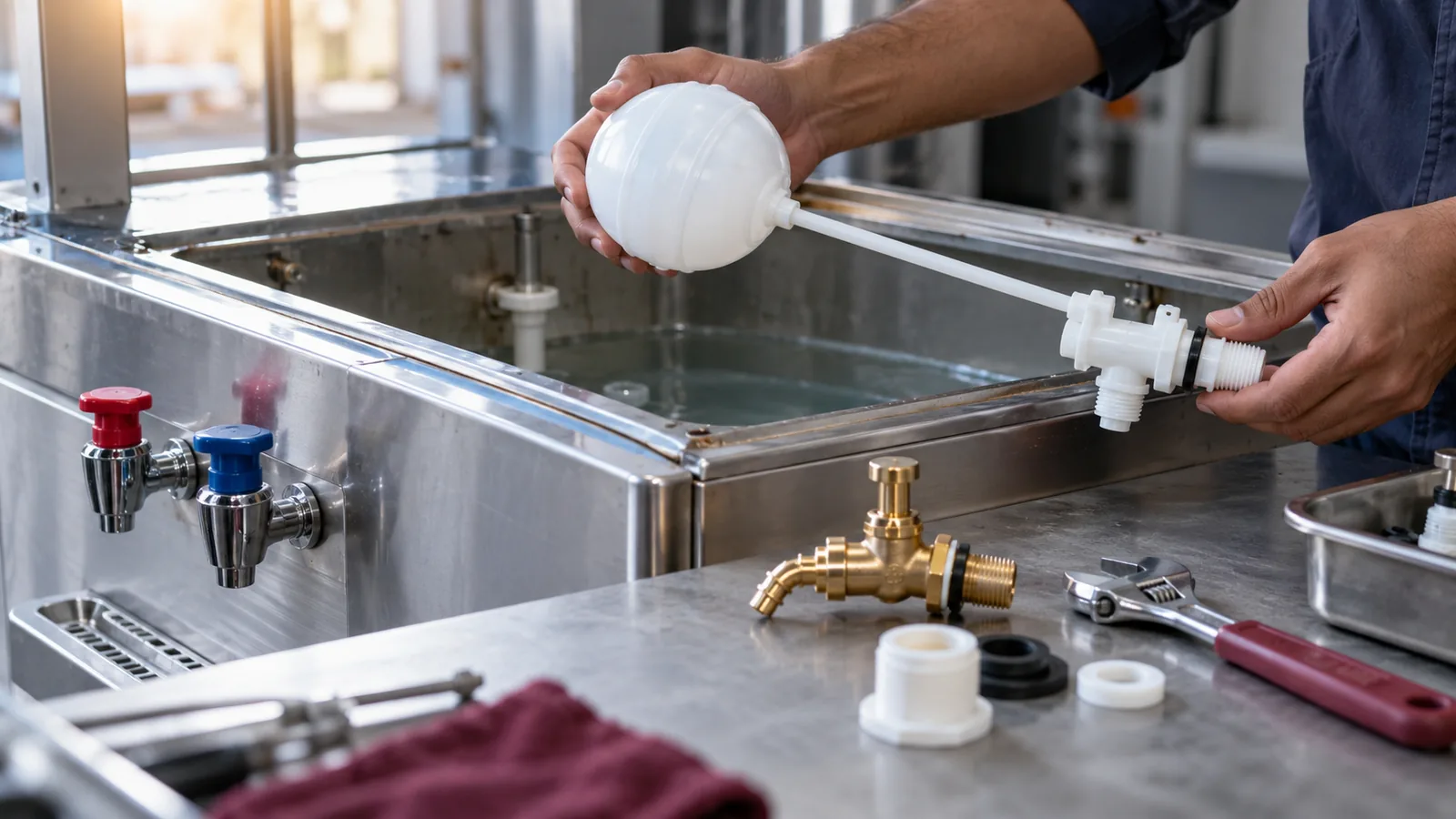
A float valve controls the water level inside a water cooler or dispenser. As the tank fills, the float rises and closes the inlet; as water is drawn off, the float drops and the inlet opens again. Our catalogue lists the float valve in nylon, supplied as a set with the float ball, valve body and rod.
To find out whether the float valve is the cause, work through these steps with the supply switched on and the tank lid open.
- Watch the tank fill and note where the float sits when the water stops rising, or whether it stops at all.
- Lift the float ball gently by hand. If the inflow stops when the float is raised, the valve itself can still shut off, and the problem is the float position, a bent rod or a float that is not moving freely.
- If water keeps flowing even with the float fully raised, the valve body or its sealing surface is worn or dirty, and the set needs replacing.
- Check that the float and rod move without touching the tank wall or other fittings.
- Look at the rod and float ball for cracks or water inside the float, which stops it from rising properly.
How to choose the right float valve
Float valves look similar but are not always interchangeable. Before ordering, compare the replacement against the old one on these points.
- Inlet connection: the way the valve fits the tank and the supply line must match.
- Rod length and float size: they set the water level, so they should suit the depth and layout of the tank.
- Material: our catalogue float valve is nylon, a common choice for plastic fittings that sit in contact with water.
- Quantity and repeat use: workshops that service many coolers often keep a small stock of sets.
If you are unsure, send us the old valve or a clear photo with the cooler details. We will confirm what is available and quote. Measurements and fitment details that are not in the catalogue are confirmed per enquiry, not assumed.
Dripping tap: the push cock
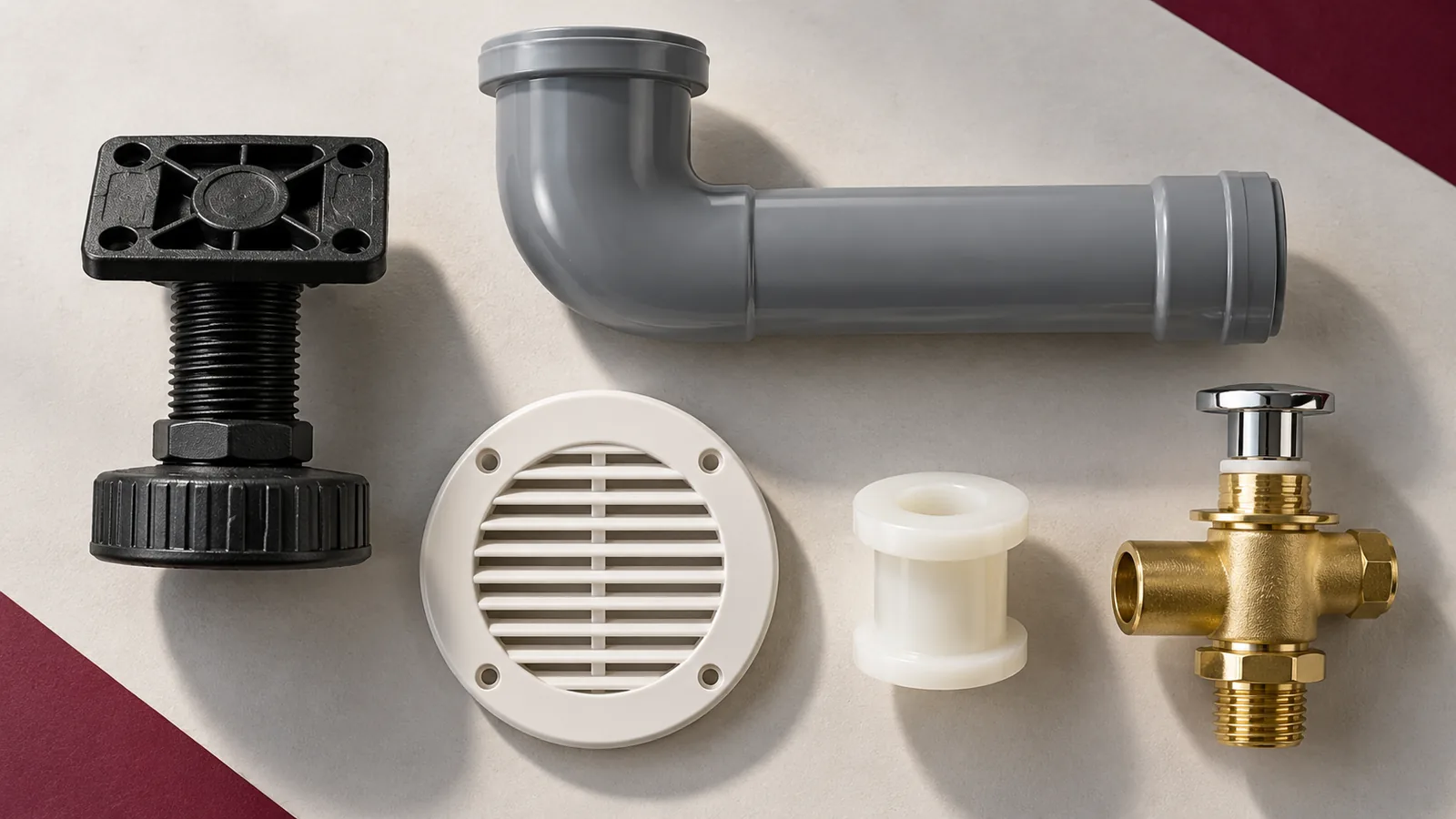
The push cock is the tap the user presses to draw water. A tap that keeps dripping after release has usually lost its seal inside, or is not returning fully. Our push cock is made in brass and listed in light and heavy variants. Heavy variants are generally the better match for busy, high-use locations, while light variants suit lighter use. Match the variant to the way the cooler is used and to the fitting you are replacing.
Water under the cooler: waste pipe and coupling
If the tank and tap are dry but water still appears below the cabinet, follow the drain run. The waste pipe in our catalogue is made in PPCP, and the waste coupling joins the run to the drain connection. Check for hairline cracks, a coupling that has loosened, or a partial blockage that makes water back up and find another way out.
What to send us for a replacement
- The old part, or two or three clear photos from different sides.
- The part name, if you know it, and the cooler it came from.
- The size that matters, measured with a scale or calliper if you have one.
- The quantity you need now, and whether it will repeat.
Send these through the enquiry form or call us from the contact page. You can also browse the full range of water cooler spare parts.
Share this guide
WhatsApp