In this article
The doors of a display counter are opened and closed many times a day, so their small parts take more wear than almost anything else on the machine. When a door becomes stiff, noisy, loose or will not seal, the cause is rarely the glass or the frame. It is usually one of five small parts: the F-bush, the door lock, the hinges, the door spring or the gasket. This guide explains what each part does, how wear shows up and what to check before you order.
F-bush: the part that decides how smoothly the door slides
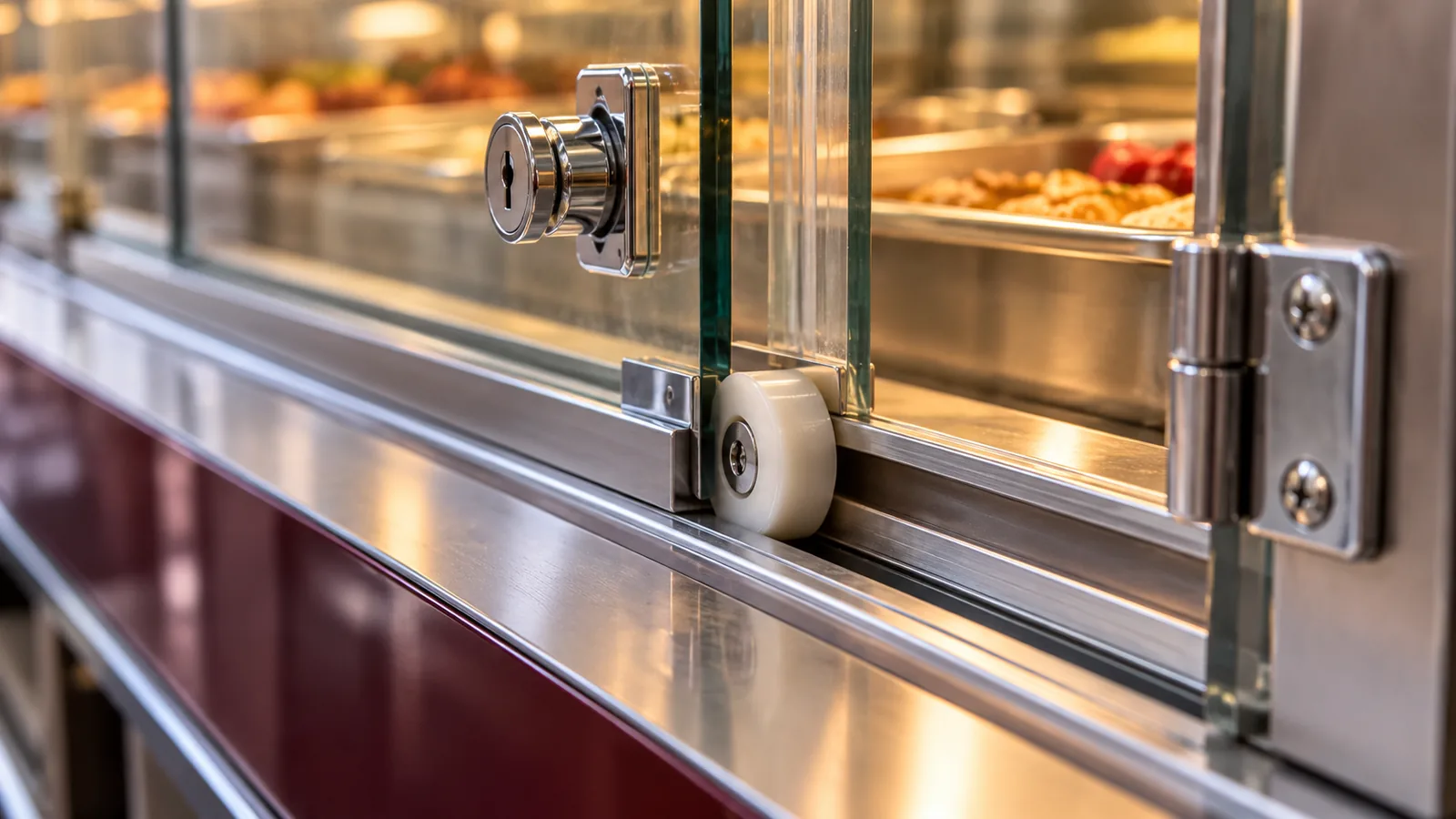
The F-bush is the display counter sliding door bush. In our catalogue it is made in nylon. It sits in the door channel and carries the door as it slides, so a worn one shows up as a door that drags, jumps or rattles in the track.
- The door feels rough or needs a push to start moving.
- You can hear a scraping or clicking sound along the channel.
- The door sits lower on one side or no longer lines up with the frame.
- The bush looks flattened, chipped or visibly shortened compared with a new one.
Always replace bushes in pairs or as a full set for the door. A single new bush next to a worn one leaves the door uneven.
Door lock and handle: security and alignment
The door lock holds the door closed and secures the contents, and the handle lock and bracket handle are the parts the user actually touches. Lock faults are often misdiagnosed. A lock that will not engage may simply be out of line because the door has dropped, which brings you back to the bush. Check the door alignment first, then test the lock on its own.
Hinges and door springs: swing doors and self-closing action
Where the counter or freezer has a hinged door, hinges and springs control how it swings and closes. Our catalogue includes the general hinge, the L-type hinge, the SS Kabja, the U-type door spring and the L-hinge door spring.
- Door will not stay closed or closes slowly: check the spring first, then the hinge.
- Door sags or is hard to line up: look for a loose, bent or worn hinge.
- Door squeaks or binds as it swings: check for a hinge pin that has worn or a hinge leaf that has bent.
Hinge and spring styles differ, so the shape of the old part matters. Send a photo of both the part and the place where it mounts.
Gasket: the seal that is easy to forget
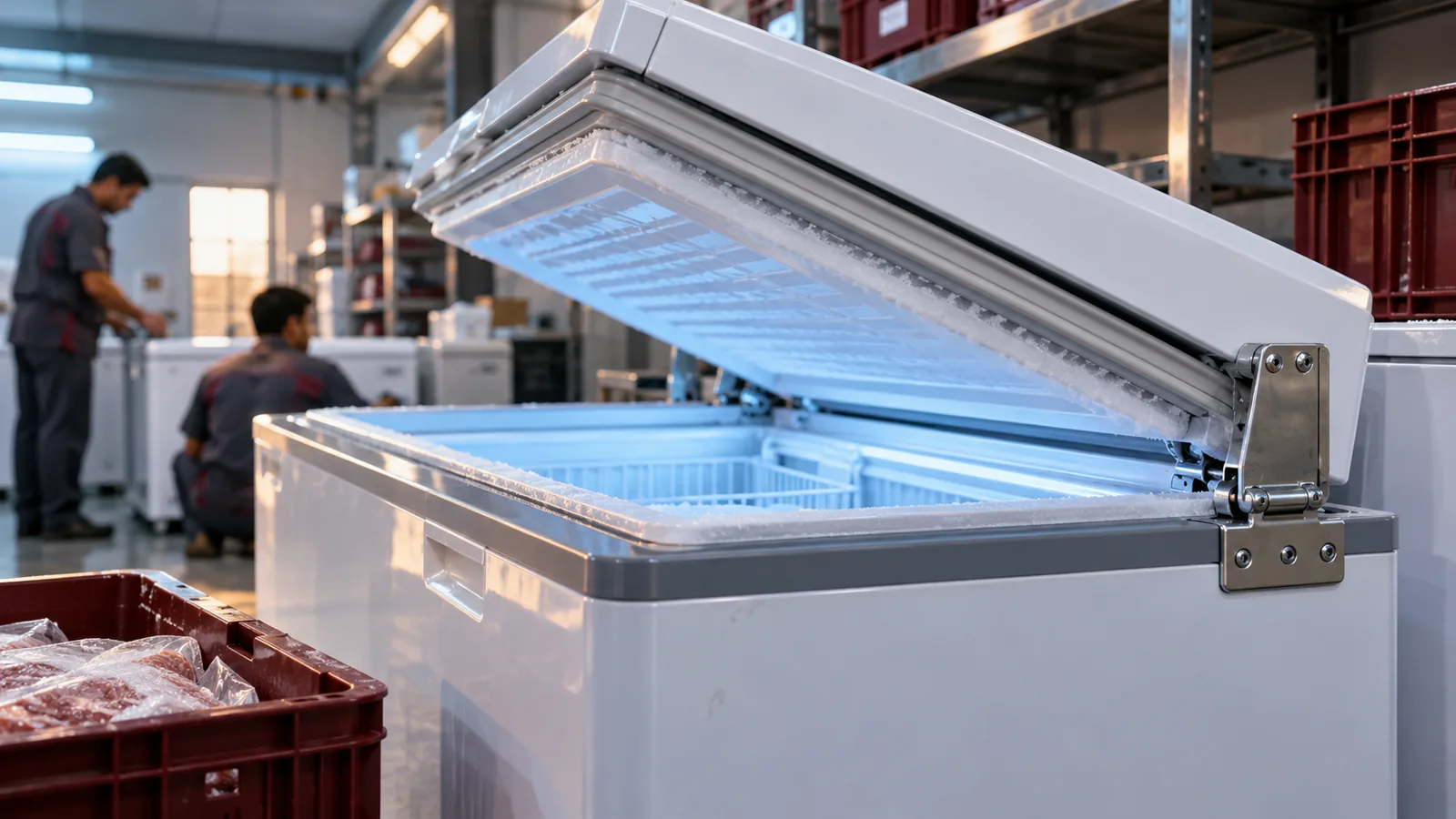
The gasket seals the door against the frame of display counters and deep freezers, helping keep the cold in and moisture out. A gasket that has hardened, split or flattened lets air through, so the machine works harder to hold temperature. Run your hand around the closed door and look for gaps, cracks, or sections that no longer spring back.
A simple order of checks
- Open and close the door slowly and listen. Note where it sticks or rattles.
- Check the F-bushes and channel for wear, dirt or damage.
- Check the hinges and springs, if fitted, for play, bending or weakness.
- Check the lock and handle once the door sits true.
- Inspect the gasket around the whole door edge last.
| Symptom | Likely part |
|---|---|
| Door drags or jumps in the channel | F-bush |
| Door will not latch or lock | Door lock, or a door out of alignment |
| Door sags or will not close by itself | Hinge or door spring |
| Cold air escapes at the door edge | Gasket, or door alignment |
How to order the right part
Most of these parts come in several shapes, and the catalogue does not list every machine fitment, so the quickest route is to send what you have. A photo of the old part, the machine it came from and the size that matters is enough to begin, and we confirm availability and quote.
Browse the full range of deep freezer and display counter parts, then use the enquiry form or the contact page to send your requirement.
Share this guide
WhatsApp