In this article
Every assembler and repair business eventually hits the same wall: a part that is broken, discontinued or simply not available from any catalogue. Often the machine around it is sound, and the missing piece is a small moulded plastic part. This is where a manufacturer that can develop parts on demand becomes useful. This guide explains how custom plastic moulded parts generally go from sample to regular supply, and what information to share so the process moves quickly.
When a custom part makes sense
- The part is not available anywhere, or the original supplier no longer makes it.
- You use the same part regularly, so a one-time development effort is worth it.
- You are an assembler or OEM that needs a part made to your own design.
- A catalogue part nearly fits, but needs a different size, shape or feature.
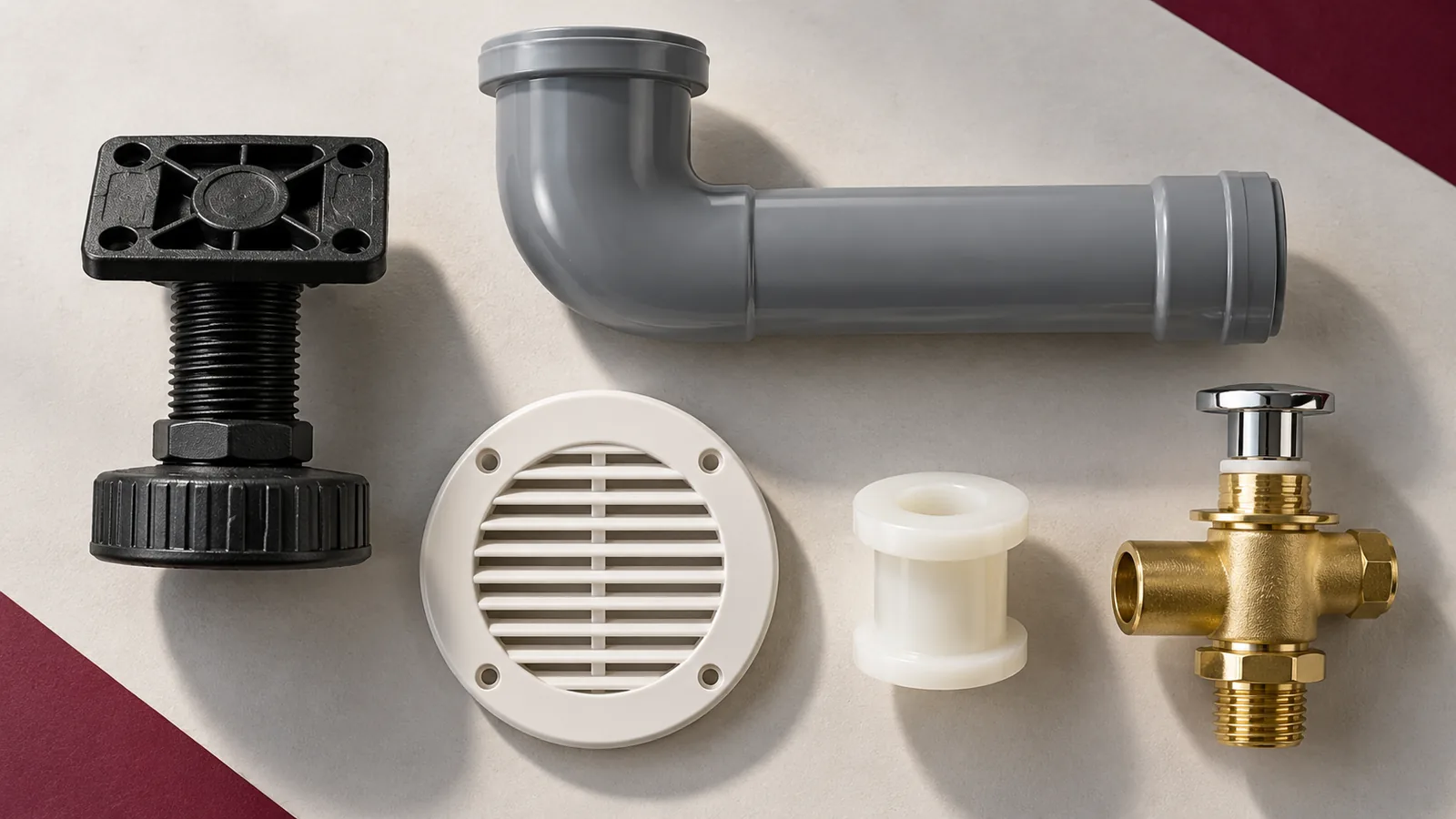
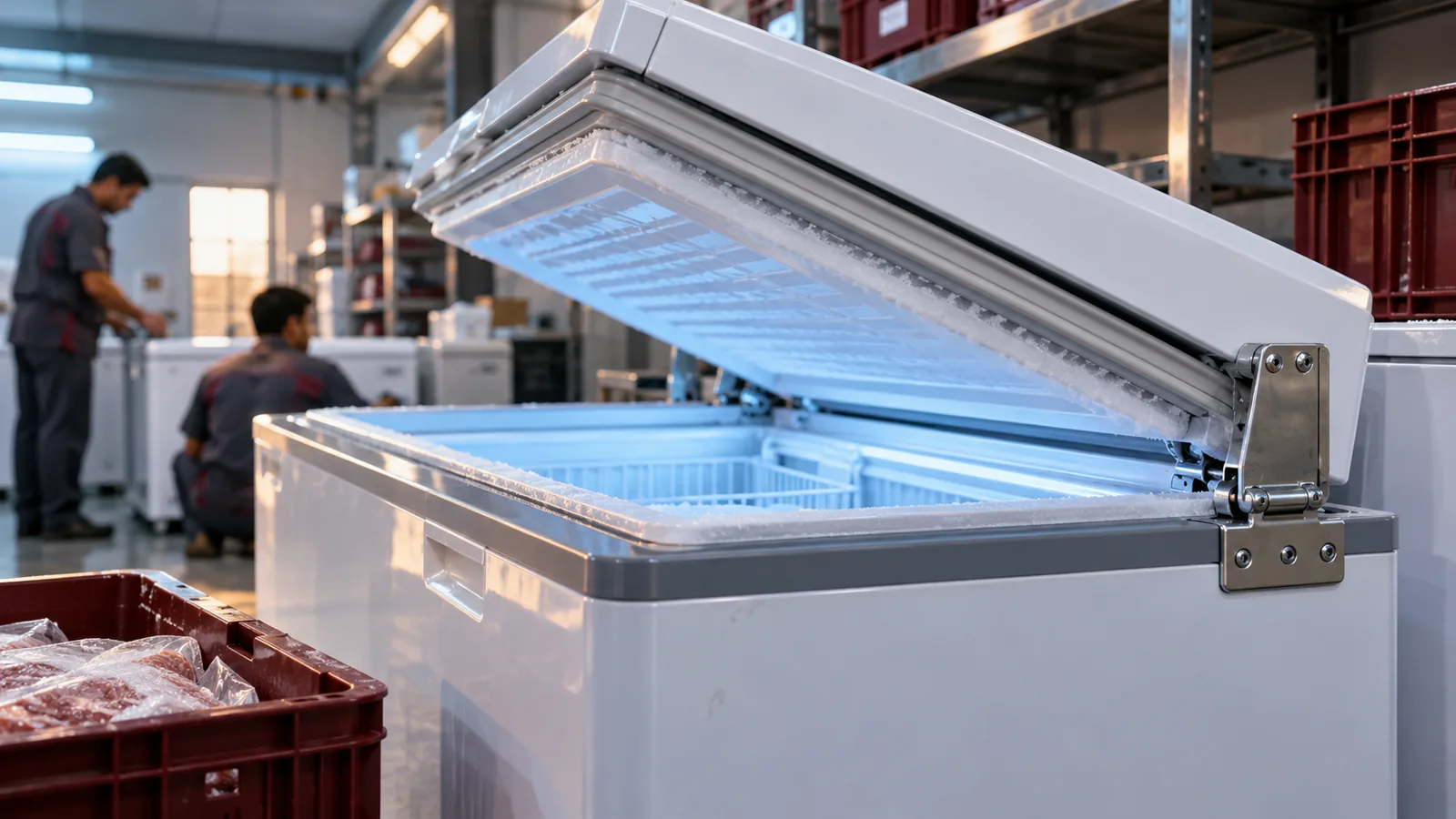
If a similar part already exists, check the catalogue first. You can browse our water cooler spare parts and deep freezer and display counter parts. If your part is different, the on demand customised products group is the place to start.
The path from sample to supply
The details differ from part to part, but moulded plastic parts generally move through the same stages. Treat this as a general outline. Exact steps, timing and costs depend on the part, and we confirm them for your requirement.
- Enquiry: you describe the part and send a sample, drawing or photo.
- Review: the manufacturer studies the part, the way it is used and what it needs to fit with, and confirms whether it can be made.
- Specification: the key dimensions, material and any special features are agreed so that both sides are describing the same part.
- Mould development: for a moulded part, a mould is made to the agreed shape.
- Trial and approval: early parts are made and checked against the sample or drawing, and adjusted if needed.
- Regular production: once the part is approved, it is made in the quantities you need.
- Supply and repeat orders: the part is dispatched, and later orders can follow the same approved specification.
What information to share
The more complete the first message, the faster the first answer. You do not need a finished drawing, but these points make a real difference.
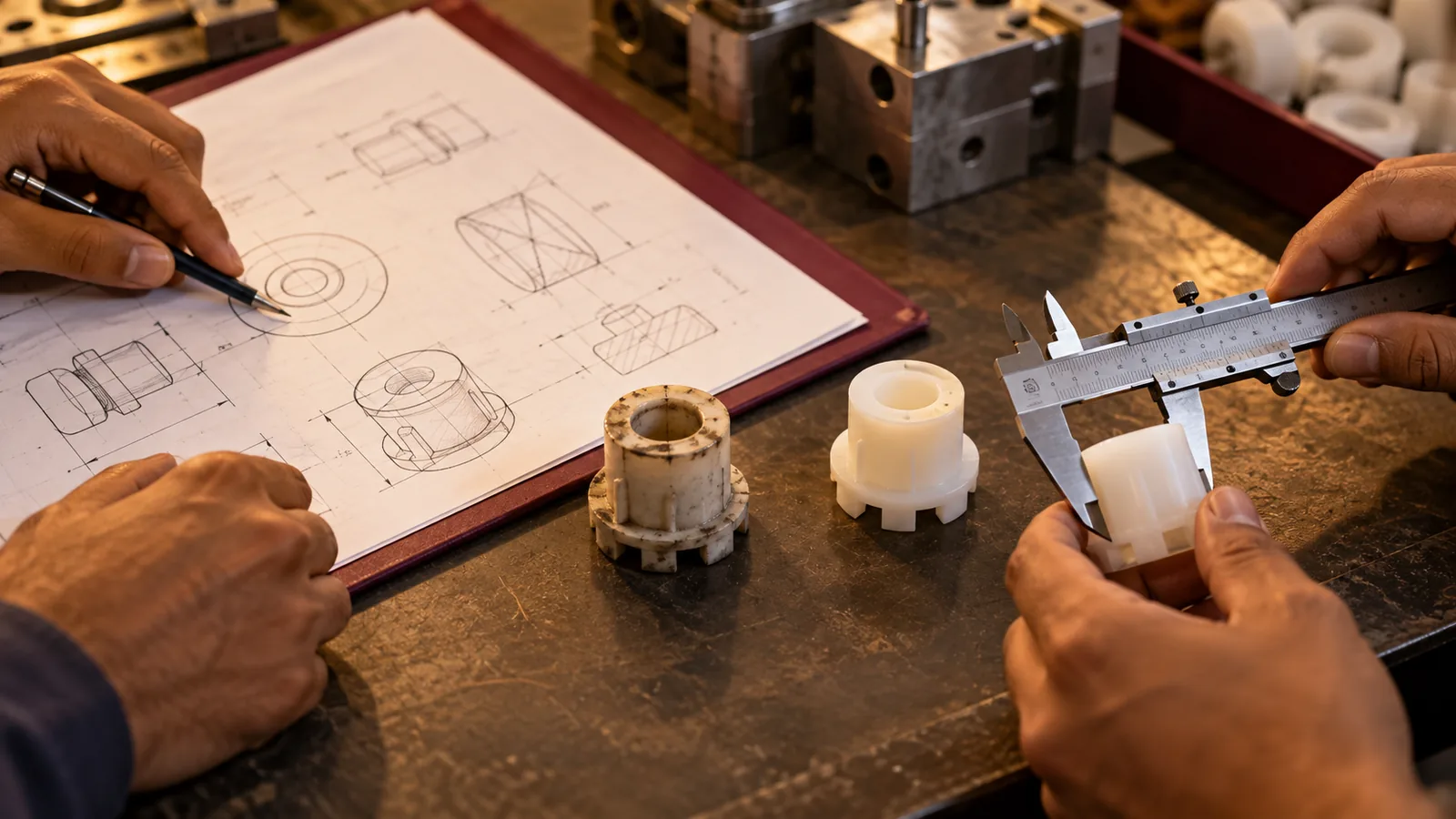
- A sample, even if it is broken or worn. Tell us which side or feature is most important.
- A drawing or sketch, with the dimensions that matter to you marked.
- Photos from several angles, with a ruler or scale in the picture.
- Where the part is used: the machine or assembly, and what it fits with or moves against.
- Material preference, if you have one, or what the original is made from if you know.
- Colour or finish, if it matters for the application.
- Quantity, both for the first order and, if you can estimate it, the repeat requirement.
- Problems with the current part, such as where it breaks or wears. This helps improve the next version.
Sample, drawing or photo: which is best?
A physical sample is the most useful starting point, because it shows the real shape, wall thickness and fit in a way a photograph cannot. A drawing is the next best, particularly when the dimensions are marked. A photo alone can start the conversation, but expect follow-up questions about sizes. If you can send more than one of these, send them all.
Questions to ask any manufacturer
- Can you confirm the material for this part and why it suits the use?
- How will you check the finished part against my sample or drawing?
- What do you need from me to start, and what will you confirm in writing?
- How are repeat orders handled once the part is approved?
- What is the process for changes, if the first version needs adjusting?
Ask the same questions of every manufacturer you speak to. Clear, specific answers are a good sign of a supplier you can plan around.
Start with a short message
The easiest way to begin is to send what you have. Use the enquiry form to attach photos and details, or reach us from the contact page. If you only have a broken part and a rough idea of its use, that is a perfectly good start. We will tell you what else we need.
Share this guide
WhatsApp