In this article
A deep freezer depends on one thing above all: a door that closes fully and seals all the way round. When the gasket hardens or the hinge wears, the door stops doing that, and the machine pays for it in frost, wasted effort and unreliable cooling. This guide helps technicians, dealers and freezer owners recognise the signs, find out which part is responsible and order the correct replacement the first time.
Signs the gasket needs replacing
The gasket is the flexible seal between the door and the cabinet. It works by being slightly compressed when the door is shut, so wear shows up as a loss of that contact.
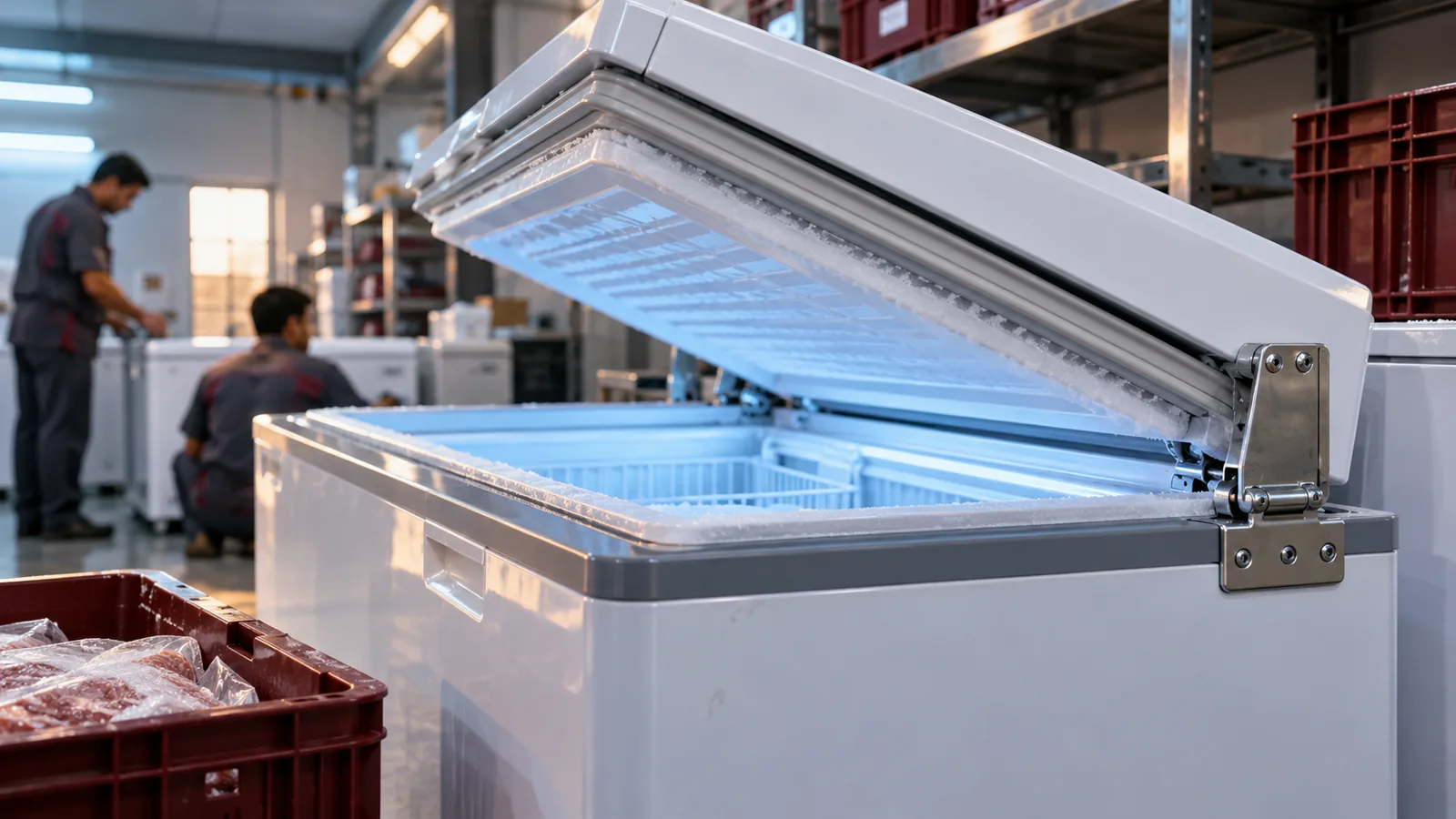
- Frost or ice building up along the door edge or inside the opening.
- Moisture or water around the door after it has been closed for some time.
- Visible damage: cracks, splits, flattened sections or a gasket that has hardened and no longer springs back.
- A gasket that has pulled out of its channel or has shrunk and left a gap at the corners.
- The compressor running for long periods without the cabinet holding temperature.
Signs the hinge needs replacing
Hinges carry the weight of the door and set where it sits. Our catalogue includes the general hinge, the L-type hinge and the SS Kabja, along with the U-type door spring and the L-hinge door spring that help the door close.
- The door sags, or one side sits lower than the other.
- The door does not close on its own, or does not stay shut.
- There is visible play or looseness in the hinge when you move the door.
- The hinge is bent, rusted or has a cracked mounting point.
- The door scrapes the frame or the gasket seats unevenly all the way round.
Gasket or hinge: which one first?
The two problems feed each other. A sagging hinge lets the gasket wear unevenly, and a worn gasket can make a good door look badly aligned. Check the hinge and door position before you fit a new gasket. If the door sits true and the gasket is damaged or hardened, replace the gasket. If the door is off-square, fix or replace the hinge first, then reassess the seal.
| Pattern | More likely |
|---|---|
| Frost or gap along one side only | Hinge or door alignment |
| Frost or damage all the way round | Gasket |
| Door will not stay shut by itself | Hinge or door spring |
| Gasket worn at the hinge side first | Hinge play loading the gasket unevenly |
What to measure before you order
Replacement parts need to match the old ones. A few simple measurements save an exchange later.
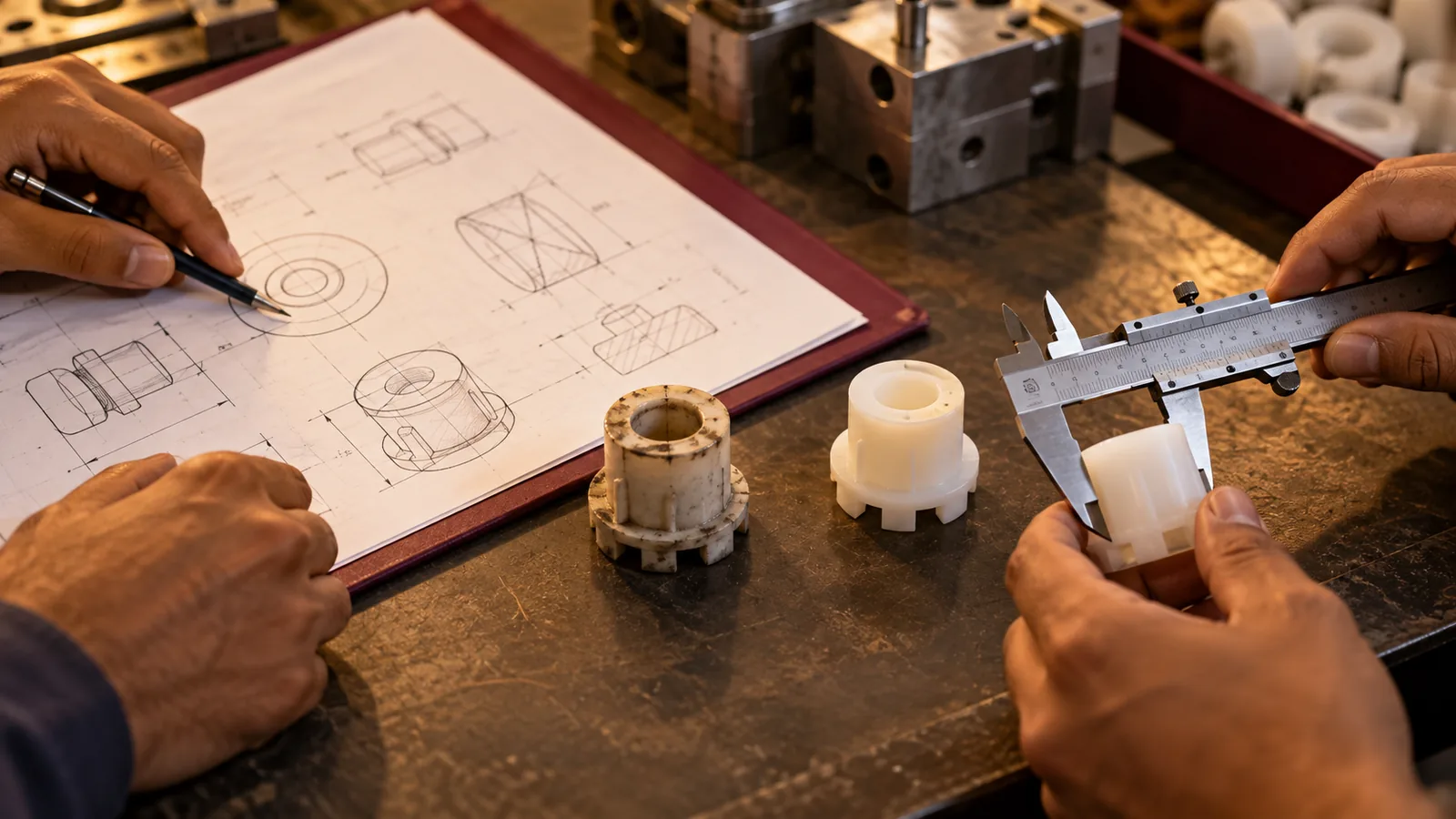
- Gasket: the total length of the run, the width of the gasket and the shape of its cross-section. A clear photo of a cut end is very helpful.
- Hinge: the overall length, the width of each leaf, the spacing between the mounting holes and the hole size.
- Door spring: the overall length and the type (U-type or L-hinge), plus a photo of how it is fitted.
- Machine: the freezer type and any marking on it, even if you are not sure it will help.
What to send us
You do not need exact drawings to begin. Any one of these is enough to start the conversation.
- The old part itself, or a clean section of it.
- Clear photos from the front, side and the mounting point, with a scale or ruler beside the part.
- Measurements for the points above, if you can take them.
- Quantity, and whether you expect to reorder.
- Where you are and when you need it.
Send these through the enquiry form or call us via the contact page. We confirm availability and quote. Where the catalogue does not list a specific size or shape, we will say so instead of guessing. You can see the whole range under deep freezer and display counter parts.
Keep a small stock if you service many freezers
Dealers and service workshops that handle many deep freezers often find that gaskets, hinges and springs are the parts they reach for most. Keeping a small stock of the shapes you meet most often saves a second visit. If you want to plan that stock, list the parts and expected quantities in one enquiry.
Share this guide
WhatsApp